Interested in our products? Send us an inquiry. We’ll reply promptly!
How to Tell If a Ball Valve Is Open or Closed?
In industrial operations, knowing whether a ball valve is open or closed is critical to ensuring safe and efficient fluid control.
Misinterpreting a valve’s position can lead to unexpected downtime, leaks, or even safety risks.
In this article, we explain the visual and mechanical indicators that help engineers and operators quickly identify a ball valve’s position.
We also provide practical maintenance tips and procurement advice to ensure long-term reliability.
Understanding Ball Valve Position Indicators
Most ball valves are designed with a lever handle that aligns with the flow direction. When the handle is parallel to the pipeline, the valve is open and fluid can pass through.
When the handle is perpendicular to the pipeline, the valve is closed, blocking flow completely.
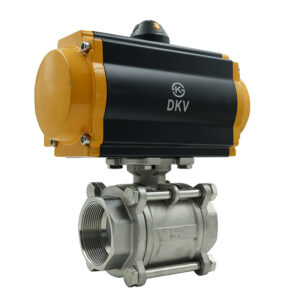
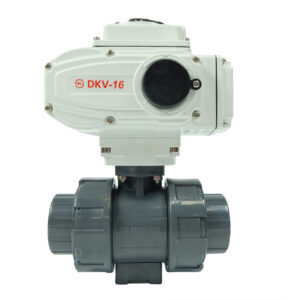
Some advanced valves use actuators with mechanical or electronic position indicatorsfor automationsystems, ensuring operators can monitor valve status remotely.
Tip: Always verify position indicators after installation and calibration to avoid false readings.
How to Check Without Disassembly
Engineers often need to confirm valve status without shutting down a system. Here are common ways:
Handle position:The most straightforward method—parallel = open, perpendicular = closed.
Stem slot or marking:Some valves have an engraved slot or arrow on the stem to indicate ball orientation.
Indicator windows:Certain pneumatic or electric actuators include visual indicator windows for clarity.
Reminder: Avoid forcing the handle, as this may damage seals and reduce valve lifespan.
Common Misconceptions
Myth 1:All valve handles point the same way. (In fact, multi-port ball valves may require a position diagram.)
Myth 2:Valves stay aligned permanently. (In reality, wear and actuator misalignment can shift handle orientation.)
Myth 3:You can confirm status by flow noise alone. (This is unsafe and unreliable in industrial systems.)
Advice: Always rely on physical or mechanical indicators, not assumptions.
Applications Where Position Matters
Correctly identifying valve status is essential in critical industries:
Oil & Gas:Prevents accidental leaks during maintenance.
Chemical Processing:Ensures safe handling of corrosive fluids.
Water Treatment:Avoids system overflows and improves maintenance safety.
Pharmaceutical:Maintains sterile environments by preventing unintended flow.
Case Example: A water treatment plant reduced shutdown time by 20% after upgrading to actuated ball valves with clear position indicators.